More than 300 million people worldwide live with a rare disease. That's 1 in 17 people globally.
There are more than 7,000 known rare diseases. Despite their prevalence rare diseases remain
difficult to diagnose.
The average rare disease patient consults with 5 doctors, receives 3 misdiagnoses, and waits 4 years
before receiving a final diagnosis. We want to change that.
OUR MISSION
We provide the tools to empower parents, caregivers, and individuals wading through their diagnostic odyssey.
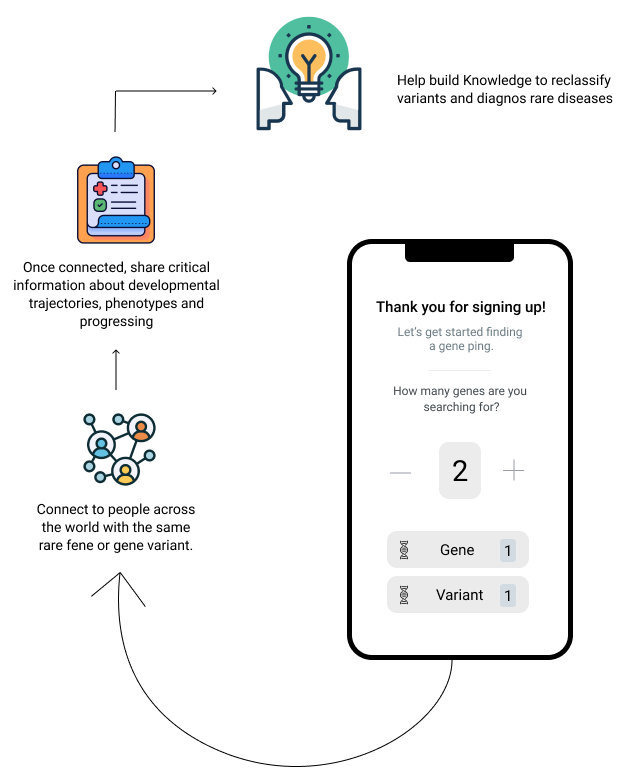
We help connect families with the same gene or gene variant finding so that they can share critical information about clinical presentation, developmental progression, and build community.
We provide families with tools to navigate the scientific literature and find matching variants in existing journals and databases.
We help parents, caregivers, and individuals build knowledge to help reclassify variants and diagnose rare diseases.
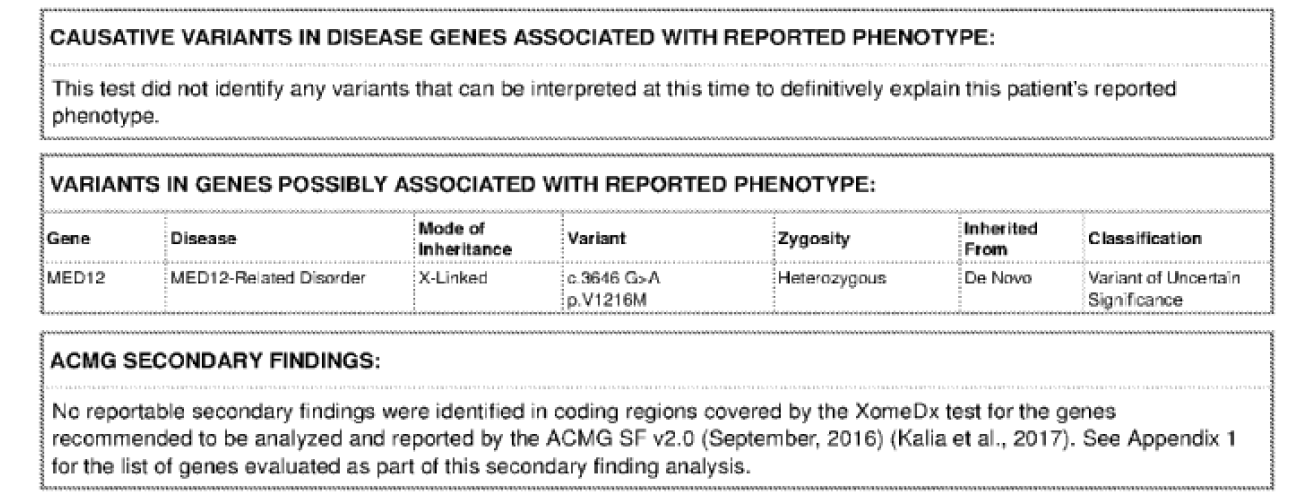
Have you or your child had whole exome or genome sequencing? Did it find a VUS:
variant of uncertain significance? Sometimes the VUS is benign and sometimes it's the
cause of your medical concerns. Often times there just aren't enough cases or
information to allow clinicians or geneticists to make a definitive diagnosis.
We've created an app to help you connect to other families like yours. Families with the same gene or gene variant finding who are looking for answers. All you need to do is sign up with an email, provide the gene name from your test results, and the gene variant if possible, and away you go. If there's a match, the app will ping you. Then you exchange contact info you feel comfortable sharing and connect with your match independently - off app - to protect your confidentiality and privacy.
The app is not just for those still waiting for a diagnosis. If you have been diagnosed with a rare single gene disorder, we are hoping to build a big enough user base to allow for meaningful connections of all kinds. And interested in sharing your data with the academic and research community? Or would like to be involved with future research opportunities? in so that you can participate. It's your data. You decide.
ImportantFind the gene and Variant on your test result